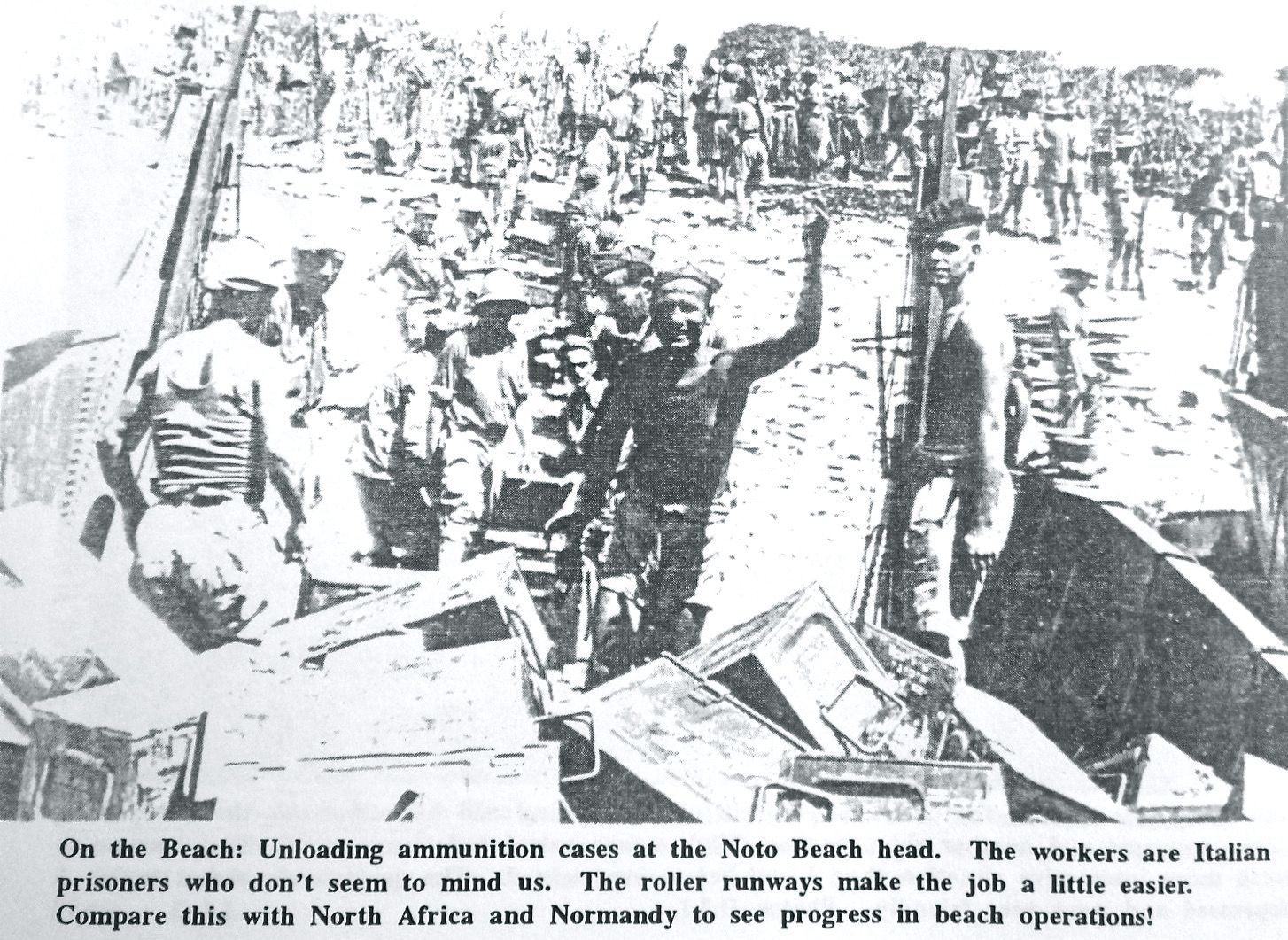
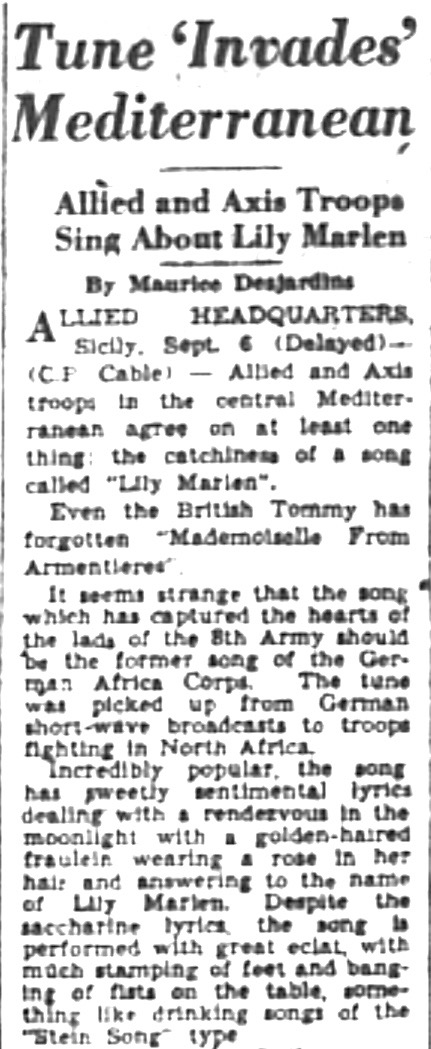
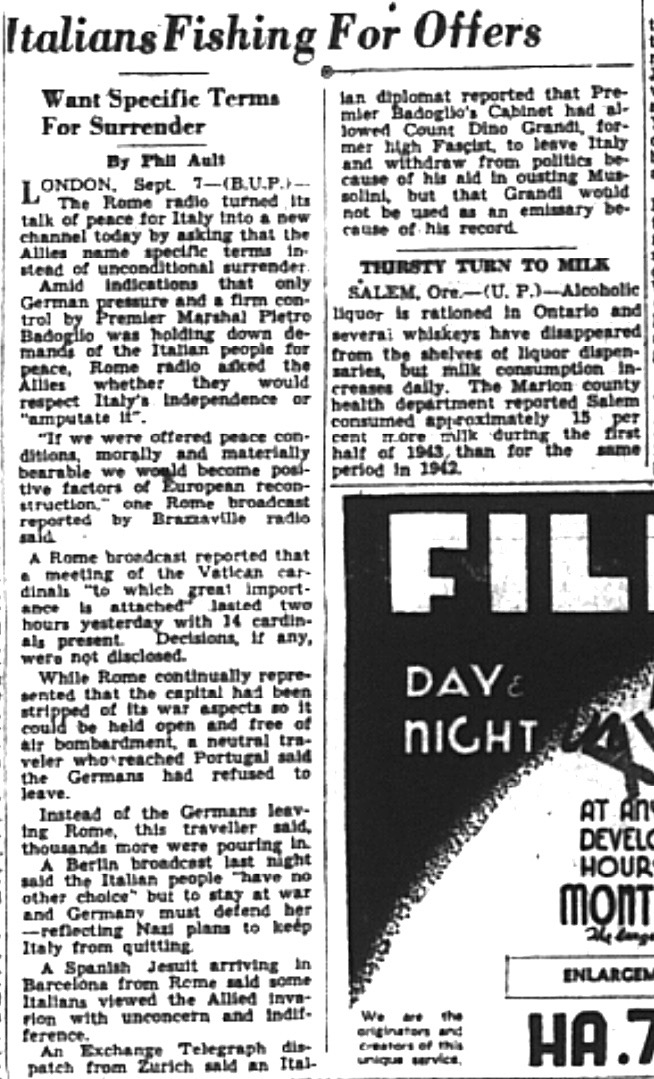
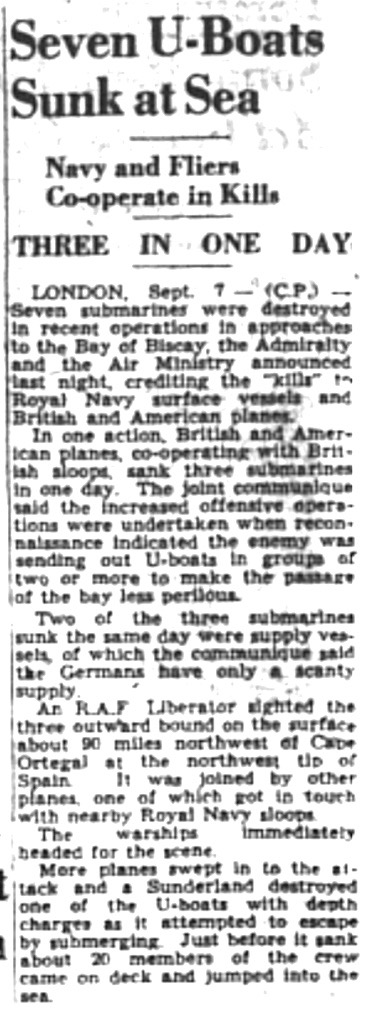
So, Where is War Correspondent Sholto Watt? What?

Headlines in The Montreal Star, September 9, 1943. As found on
microfiche, University of western Ontario (UWO), London ONT
I started this research project, searching through 1943 issues of The Montreal Star (From Sept. - early Oct., re invasion of Italy), because I had discovered a very interesting sentence in an equally interesting story by a Canadian officer associated with the Canadian flotilla of landing crafts used to land men and materiel of war on the toe of the boot in Italy during Operation Baytown.
I don't have a name for the officer. I don't have a name for the reporter. All that sparked my attention was the following line:
"There was one expedition I do remember, when our maintenance staff took a reporter from the Montreal Star on a trip. We landed at Scilla, looked over the town..." (Page 101, Combined Operations, by RCNVR veteran Clayton Marks)
Because my father was a part of the Canadian 80th Flotilla of Landing Crafts working in The Med at that time, and mentions visiting the toe of the boot himself in September, 1943, I am hoping to find stories re the Landing Crafts, Mechanised (LCMs) with which he was familiar.
Sholto Watt is a reporter with The Montreal Star known to have travelled to The Med with several other Canadian writers. (I found a story re the writers in The Winnipeg Tribune; the story is posted on this site). And I featured Mr. Watt's first story for The Star in an earlier post, a week or so ago, during the early days of this research project.
Unfortunately, I have not seen anything by Mr. Watt since that first article. And I'd like to know if he is the above-mentioned writer transported in the Canadian landing craft. So, where is Sholto? Why isn't he posting more stories? What is he up to?
Honestly, I'm not sure, but I'll keep looking.
From the September 10 issue of The Montreal Star:

In the caption attached to the above photo, we read "In the lower picture". It appears after the following news article - not by Sholto Watts. The 'thrust' that is mentioned, south of Naples, may have been Operation Avalanche, the tough landing on beaches of Salerno:


I am certain I displayed the top photo of Gen, Bernard L. Montgomery in an earlier post, and I was able to find it easily again:

That gives me hope that I will also find and be able to display a clean copy of the photograph below, of the landing crafts, troops and some of the veterans of RCNVR who manned the landing crafts. I bet there is a copy somewhere in the vaults at Imperial War Museum, UK. It's on my to-do list.

Link to Wikipedia to see the above with more details. Photo Credit - IWM
That gives me hope that I will also find and be able to display a clean copy of the photograph below, of the landing crafts, troops and some of the veterans of RCNVR who manned the landing crafts. I bet there is a copy somewhere in the vaults at Imperial War Museum, UK. It's on my to-do list.

and some of the troops will be Canadian as well


The largest invasion exercises ever in the English Channel are mentioned in the article that follows. So, while Canadians in Combined Ops are busy in Italy, more combined operations are taking place back in the UK, in preparation for D-Day Normandy, less than a year away:


The following story gives us a clear picture of the ongoing action north of the toe of the boot. More landings of Allied troops did take place in the days and weeks that followed the initial landings at Reggio Calabria, on the toe of Italy's boot. Landings at Salerno and Anzio were met with sharp resistance and much has been written about those actions.
Note that "the first eyewitness account of the Allied landings" was brought back by a young Canadian flier FO John Anthony Vasicek - from Chatham, Ontario, about one hour from my home.
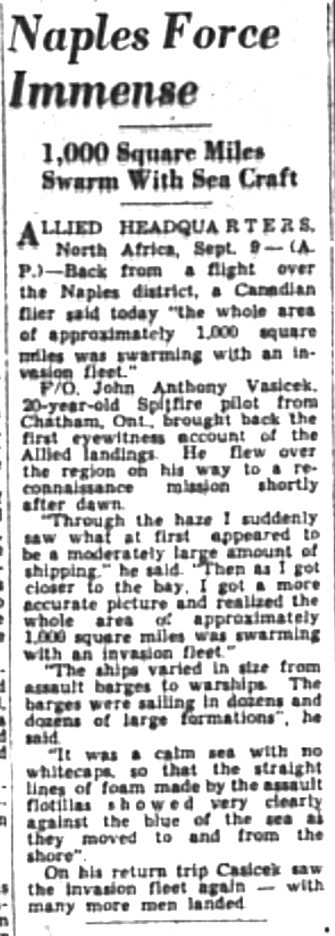
Note the spelling of the flier's name in the last sentence
above. 'V' and 'C' are side by each on a keyboard.
With the help of Mr. Google I was able to locate a few more lines about the Canadian pilot John Vasicek at Gathering Our Heroes, an important website dedicated to honouring WWI and WWII enlistments from the Chatham Kent area:
Service # J/13034
Unit # 683 Sqdn., RCAF
Son of Stephen and Mary Annie (nee Bartosek) Vasicek, of R.R.#1 Mull, Ontario, Canada. Brother of Mary Ann, Lloyd, Charles....
Son of Stephen and Mary Annie (nee Bartosek) Vasicek, of R.R.#1 Mull, Ontario, Canada. Brother of Mary Ann, Lloyd, Charles....
John enlisted at Windsor, ON in the RCAF 13 Sept. 1941. He graduated as a Pilot Officer in September, 1942 at RCAF – Montreal at the head of his class.
The CDN 9/09/42* reported that a flight (was made) over the Naples district (and) a Canadian flier said, “the whole area of approximately 1,000 square miles was swarming with an invasion fleet”.... (the report continues, as per the news article above)
[*Editor's comment: If The Star gives an accurate account, and I believe it does, then the date should read 9/09/43]
At Gathering Our Heroes we read this unfortunate conclusion:
John’s father Stephan was notified in early February, 1944 that his son was missing after operations. He presumed that this was in the Mediterranian theatre of war. He was flying in an RAF squadron for several months assisting in the invasion of Sicily and Italy. CDN 2/02/44(P)
Age: 22, KIA – Date of Death: 18/01/1944. Flying Spitfire fighter EN 504 on reconnaissance flight for the 5th Army. He crashed south of Garigliano, Italy. The aircraft was seen to go into a spiral dive and F/O Vasicek bailed-out at 100 feet but he made no apparent effort to open his parachute. The crash is believed to have been caused by a lack of oxygen and not due to enemy action.

John’s father Stephan was notified in early February, 1944 that his son was missing after operations. He presumed that this was in the Mediterranian theatre of war. He was flying in an RAF squadron for several months assisting in the invasion of Sicily and Italy. CDN 2/02/44(P)
Age: 22, KIA – Date of Death: 18/01/1944. Flying Spitfire fighter EN 504 on reconnaissance flight for the 5th Army. He crashed south of Garigliano, Italy. The aircraft was seen to go into a spiral dive and F/O Vasicek bailed-out at 100 feet but he made no apparent effort to open his parachute. The crash is believed to have been caused by a lack of oxygen and not due to enemy action.


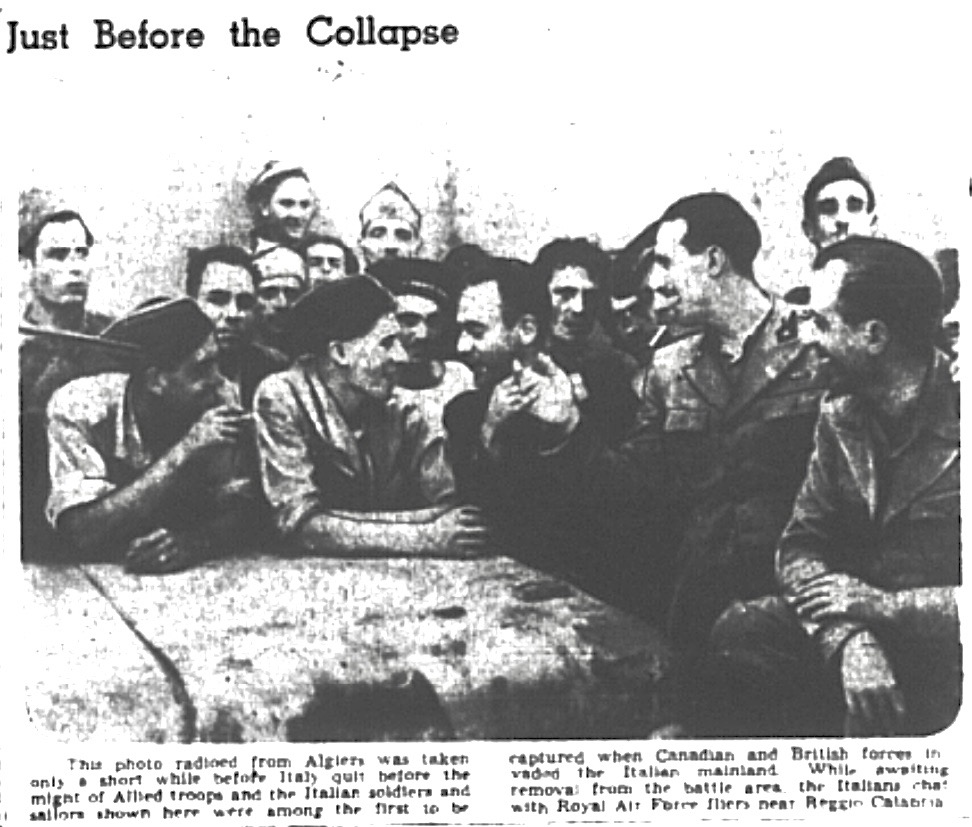

War production was booming in various Allied countries, particularly in the United States and Canada. Successes on various war fronts would not have taken place without the hard toil of workers, male and female, "back home":


As readers can see, stories taken from microfiche are not the world's clearest copies and can be a struggle to scan or read fully. My only alternative is to type the stories up myself or convince someone at The Star to digitize each issue related to the war years. Hopefully, more Canadian newspapers will move to digital copies in the future.
Headlines from September 10, 1943:

I see nothing from Sholto Watt on the front page. MIA?
I will keep looking for him
Canadians in Combined Operations were active at Reggio di Calabria for several weeks, and some were active at the landings on beaches near Salerno (Operation Avalanche). Some details about those landings appear below from the Book Combined Operations by Londoner Clayton Marks, RCNVR veteran:
SALERNO - OPERATION AVALANCHE
On September 11th the British landed unopposed in the harbour at Taranto but Salerno was a far tougher nut. Apart from Dieppe, which was a special case, it was the first seriously opposed landing that we had ventured on, and there was a period when it was near to failing altogether.
The date selected for Avalanche was the 9th of September. The Italian request for an armistice was made public on the evening of the 8th, which led some of the more ill-advised among the troops, despite warnings, to expect something like a walkover. Top level arguments, and the consequent lower level adjustments, were still continuing when the first and slowest elements of the invasion force crept out from their bases and set their course for Salerno.
Sixteen separate convoys sailed from five separate ports on six different dates, according to their speed and port of origin. There were several air attacks on passage, but the total damage was negligible; it amounted to only one LCT sunk, one Hunt Class destroyer damaged by a near miss, and one LST damaged by a bomb which passed clean through her without exploding. The last two reached their objectives, and the destroyer played a notable part in the bombardment of the beaches before being ordered back to Malta for repairs on the second day of the landings. It was a poor score for the Luftwaffe against 700 ships and landing craft.
Rendezvous and landfalls were made faultlessly, and the assault began more or less on time. The northern or British half of the front comprised of sectors, each of two beaches. On the northernmost beach the leading battalion got ashore successfully, and Brigade Headquarters followed it soon afterwards, but the right battalion on the next beach was less fortunate.
Rendezvous and landfalls were made faultlessly, and the assault began more or less on time. The northern or British half of the front comprised of sectors, each of two beaches. On the northernmost beach the leading battalion got ashore successfully, and Brigade Headquarters followed it soon afterwards, but the right battalion on the next beach was less fortunate.
By bad luck the LCT(R)s discharged their rockets too far south, and the Commanding Officer of the leading wave had to make up his mind quickly whether to land on his allotted beach, where the defenders had escaped attack, or to switch to where the rockets had struck, so as to exploit their effect. He chose the latter course, and it proved to be a wrong decision. Trying to fight his way north to the area in which he should have landed his men came under heavy fire. His supporting weapons, following in the next wave, did not know of the change of direction, and landed on the original beach, where, with no bridgehead to protect them, they were wiped out. This battalion and the reserve battalion following in its wake, each suffered 50 percent casualties. (Page 102)
(More will follow from the above account in future posts).
Now, back to The Montreal Star:
(More will follow from the above account in future posts).
Now, back to The Montreal Star:
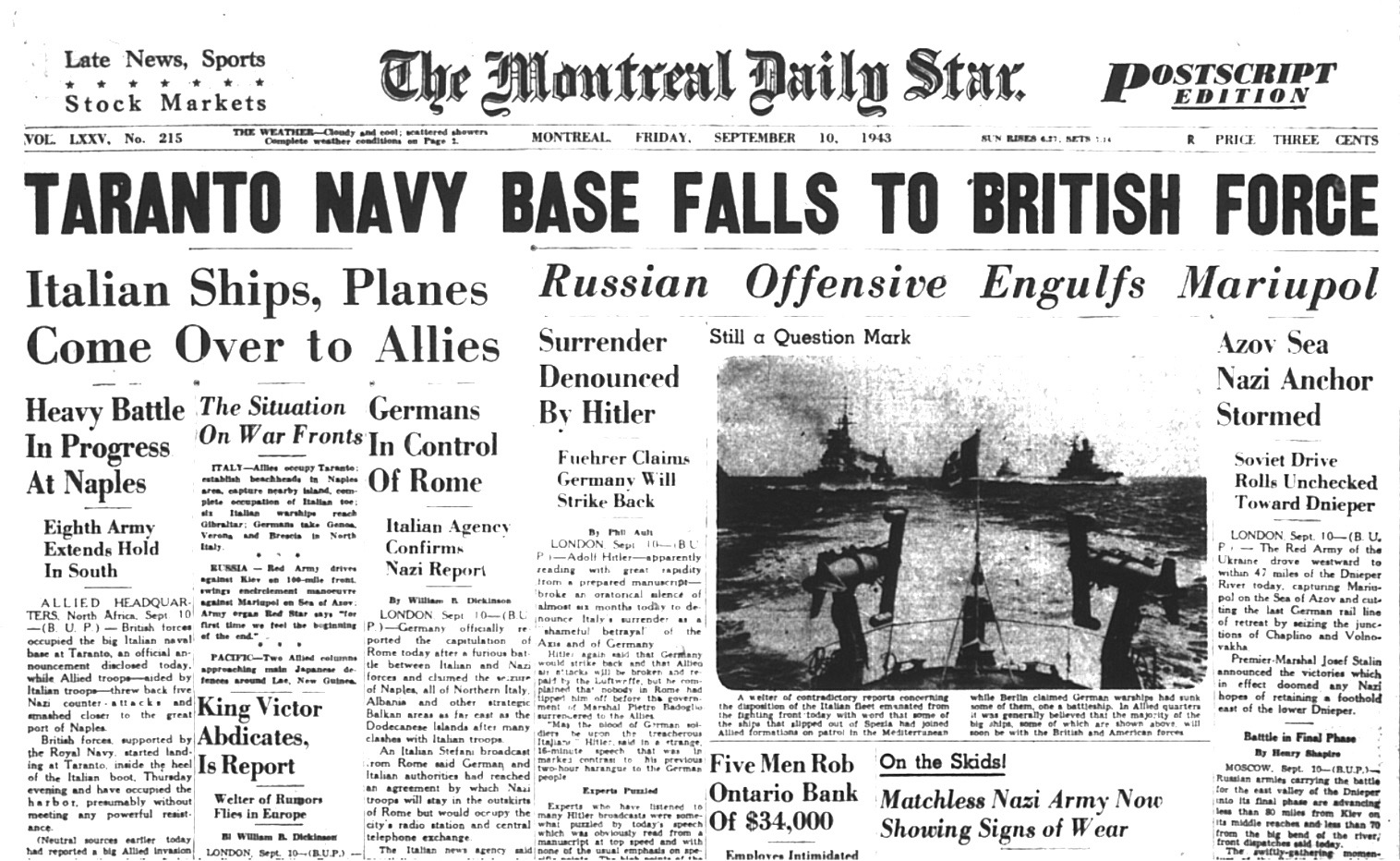

Naples is north of Salerno, where Operation Avalanche is underway. We see Salerno mentioned briefly in the article that follows:


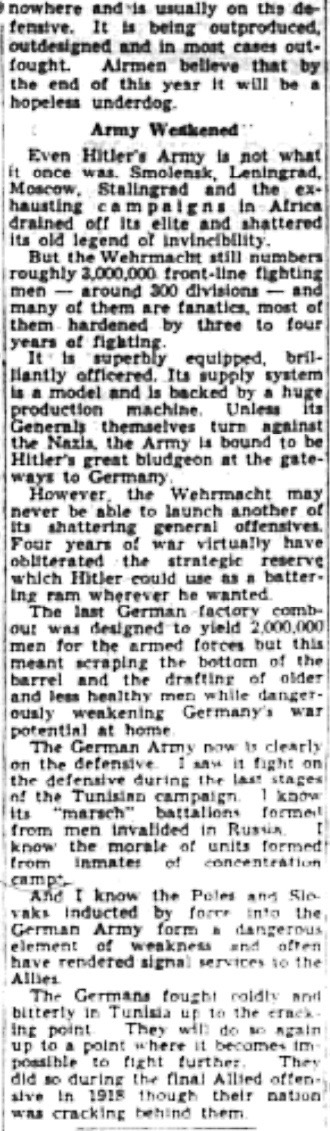


A Canadian first!? Play ball, boys! : )


Please link to Editor's Research: Invasion of Italy (7) - Montreal Star (Sept. 8, '43)
Unattributed Photos GH