Showing posts with label the arts of war. Show all posts

Monday, January 31, 2022

Arts of War: Drawings of Landing Crafts, and D-Day 1944

The First Landing Crafts Canadians Saw at HMS Northney

The Drawings of D. Moira Cruickshank, and More

A wartime photograph of a drawing of a landing craft, assault or
LCA, two views mounted on card. One of a series of photographic
reproductions of D. Moira Cruickshank's landing craft.

Introduction:

The first groups of Canadian sailor (RCNVR) volunteers for Combined Operations Command (British organization) left Canada in January, 1942, aboard the Volendam (Dutch liner). And after landing in Gourock, Scotland, these 90 - 100 raw recruits - not yet even knowing what their role was to be - were soon sent to HMCS Niobe at Greenock. Soon thereafter, they were placed upon trains and delivered to training camps HMS Northney (1 - 4) where they were told what their role was to be.

Lloyd Campbell (RCNVR, Combined Ops) writes:

After a few days at the Greenock base we were posted to HMS Northney III on Hayling Island near Portsmouth on the south coast of England. The purpose was training and it was there that we discovered we had 'volunteered' to operate Landing craft for future raids and landings under the auspices of Combined Ops (Operations).

My Naval Chronicles, page 9

The chances are very good that the Canadian sailors stepped aboard a few LCAs while at HMS Northney, and it is very possible that the drawings by D. Moira Cruickshank were revealed in classroom settings. Several of her expert and valuable drawings appear below, along with other information re the types of craft depicted: 

Photo Credit - The D-Day Story

An original drawing by D. Moira Cruickshank of a Landing Craft, Personnel (Medium) or LCPM. It shows a port side view plus a port stern view seen from oblique angle above. One of a group of drawings that were reproduced for Royal Navy landing craft crew training during the Second World War. It is drawn on the back of a naval chart of Dover. Part of the papers of D. Moira Cruickshank WRNS (Women's Royal Naval Service or Wrens) during the Second World War. From 1942 to 1944 she was based at H.M.S. Northney, Hayling Island, on drawing duties. She made drawings of different landing craft types, which were the photographed and widely circulated thoughout the Royal Navy for training purposes. H.M.S. Northney was a shore base at a pre-war holiday camp, at which sailors received initial training on landing craft. Later in the war she served at Lyneham, where she painted murals in the officers' mess, and did posters about educational and vocational training.

Photographs and a great deal of related information can be found at the informative website entitled The D-Day Story out of Portsmouth, England. (Visit the 'Discover' heading > 'The D-Day Story Collection' > 'Collection: Vehicles, Artillery and Ships')

Original drawing of a Landing Craft, Personnel (Ramped) or LCPR
by D. Moira Cruickshank. It shows a front view plus a starboard bow
view seen from oblique angle above. Photo Credit - The D-Day Story

A wartime photograph of a drawing of a landing craft, personnel
(ramped) or LCPR, three views. Photo Credit - The D-Day Story

A wartime photograph of a drawing of a landing craft, personnel
(medium) or LCPM, two views. Photo Credit - The D-Day Story

A wartime photograph of a drawing of a landing craft, support (medium)
or LCS(M), two views. Photo Credit - The D-Day Story

A wartime photograph of a drawing of a landing craft, mechanised
or LCM, two view. Photo Credit - The D-Day Story

A wartime photograph of a drawing of a landing craft, Assault or LCA,
two views. One of a series of photographic reproductions of D. Moira
Cruickshank's landing craft. Photo Credit - The D-Day Story

A wartime photograph of a drawing of a landing craft, mechanised or LCM
Mark II, two views. One of a series of photographic reproductions of D.
Moira Cruickshank's landing craft. Photo Credit - The D-Day Story

A wartime photograph of a drawing of a landing craft, mechanised or
LCM Mark III, two views mounted on card. Photo - The D-Day Story

A wartime photograph of a drawing of a landing craft, personnel (ramped)
or LCPR, three views mounted on card. Photo Credit - The D-Day Story

A wartime photograph of a drawing of a landing craft, personnel (large)
or LCPL, three views mounted on card, and a landing craft, mechanised
or LCM, two views mounted on card. Photo Credit - The D-Day Story

A wartime photograph of a drawing of a landing craft, assault or LCA
two views mounted on card. Photo Credit - The D-Day Story

Also at The D-Day Story website out of Portsmouth, visitors will find a selection of artwork by Mr. Robert Rae Rule depicting various scenes re the D-Day landings, June, 1944. Various landing crafts are seen in each drawing and a few of Mr. Rae's art pieces are shared below:

Photo as found at The D-Day Story 

Details that accompanied the above:

A drawing showing British troops landing on the Normandy beaches on D-Day. Some troops are making their way up the beach, while others are caring for the wounded. On the right a white ensign is flying at a beach group post. At the water's edge are an LST (Landing Ship, Tank), an LCT (Landing Craft, Tank) and a Liberty Ship. One of fifteen pen and watercolour drawings done by Mr Robert Rae Rule, who at the time of D-Day was a naval sick bay auxiliary on board H.M.S. Empire Mace, off Gold Beach. Most were drawn at the time of D-Day, sometimes from memory and sometimes from descriptions given by other people, often a few days after the events depicted. All are mounted on coloured paper.

A drawing of a scene on D-Day, showing British Landing Craft, Assault
(LCA) under the stern of H.M.S. Empire Mace in a rough sea, off the
Normandy coast. More information about the drawings is given on
the mounts or in correspondence. Photo Credit - The D-Day Story

A drawing showing the Landing Ship, Infantry (LSI) H.M.S. Empire Mace at
sea with several British Landing Craft, Assault (LCA) on the water around it.
Photo Credit - The D-Day Story, Portsmouth 

A drawing showing British troops inside a Landing Craft, Assault (LCA) at
6.30am on D-Day, about an hour before they are due to land in Normandy.
Photo Credit - The D-Day Story  

A drawing showing three columns of Landing Craft, Assault (LCA) of 541st
Royal Marine Flotilla practising in the Solent before D-Day, May 1944.
Photo Credit - The D-Day Story

Speaking of landing crafts used at D-Day, the photo of the pair below caught my eye. In the background is a very useful LCA, capable of delivering up to 36 members of the army to a foreign shore. And in the foreground is a special craft, indeed, and on board is "Monty giveing the honours."


Details that accompanied the above photo (click here):

A photograph showing a motor yacht (?) moving through the water, front starboard view of bow, with General Sir Bernard Montgomery and other individuals near the bow. A LCVP landing craft is in the middle distance. The photograph may show Montgomery arriving in Normandy, or inspecting or visiting ships. It was originally captioned 'Monty giveing the honours' (sic). One of a series of photographs copied from an album belonging to Bert Edwards, who served on the light cruiser HMS Bellona at the time of D-Day. In addition to taking part in Operation Neptune, the Bellona also went on several Russian convoys. On and after D-Day, Bellona was in the Omaha Beach sector to start with, and fired her guns in support of the troops ashore. Bert Edwards probably took some of the photographs but others may have been taken by other crew members. He is not sure which ones he took. See also the oral history interview with him.

I encourage readers to visit The D-Day Story, Portsmouth. There is much there to discover.

Please click here to link to more of The Arts of War as found in "The Crows Nest" Part 7

Questions and comments can be sent to G. Harrison at gordh7700@gmail.com

Unattributed Photos GH

Wednesday, April 7, 2021

The Arts of War: Editorial Cartoons, Illustrations, More (Winnipeg Tribune) (2)

The Winnipeg Tribune Offers Us a Peek at The Arts of War Feb. 1944

Irvine Library,  Saltcoats Heritage Centre, Imperial War Museum Too

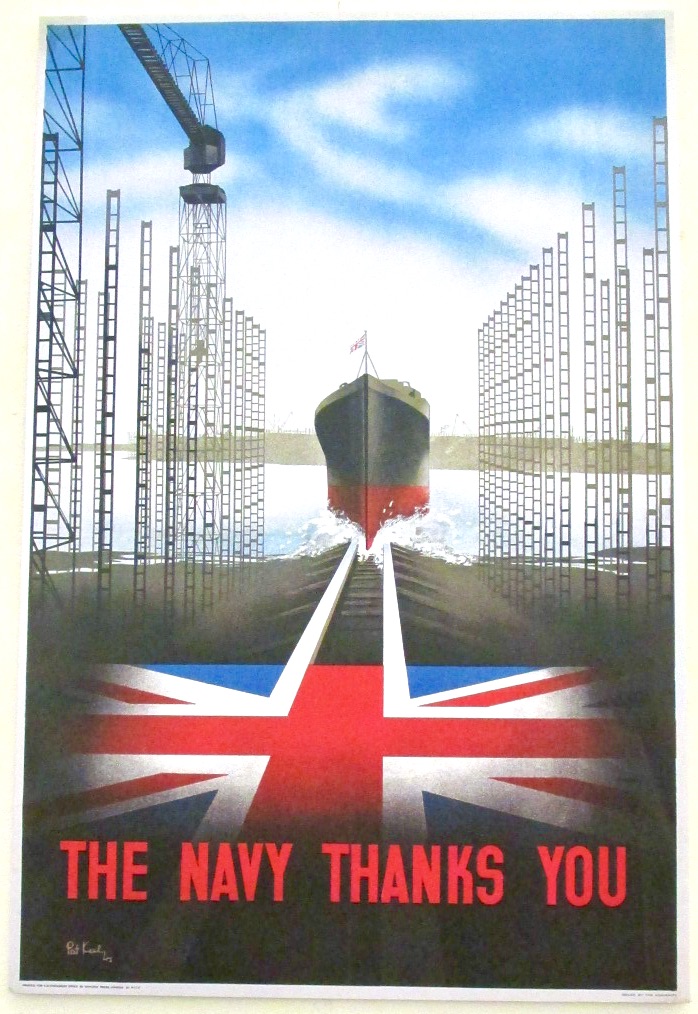
War poster as found at Saltcoats Heritage Centre, Saltcoats, Scotland
More posters and paintings are shared at the bottom of this entry.

Introduction:

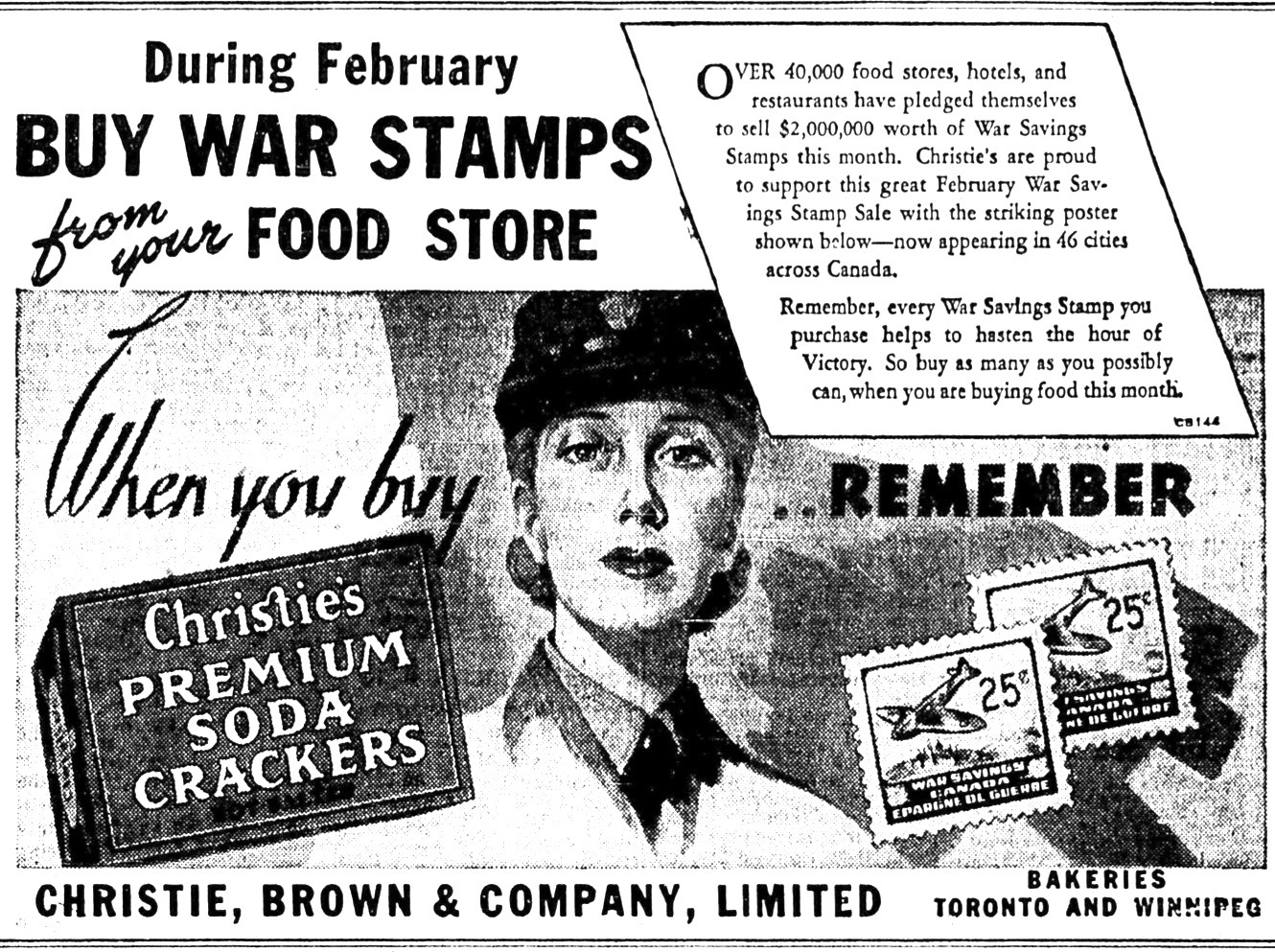
While scanning microfiche files, digital newspapers (e.g., The Winnipeg Tribune) and my own photo collection, I come across examples of editorial cartoons, commercial advertisements, poetry, sketches, paintings and more that reflect fine craftmanship and skill and knowledge of the times.

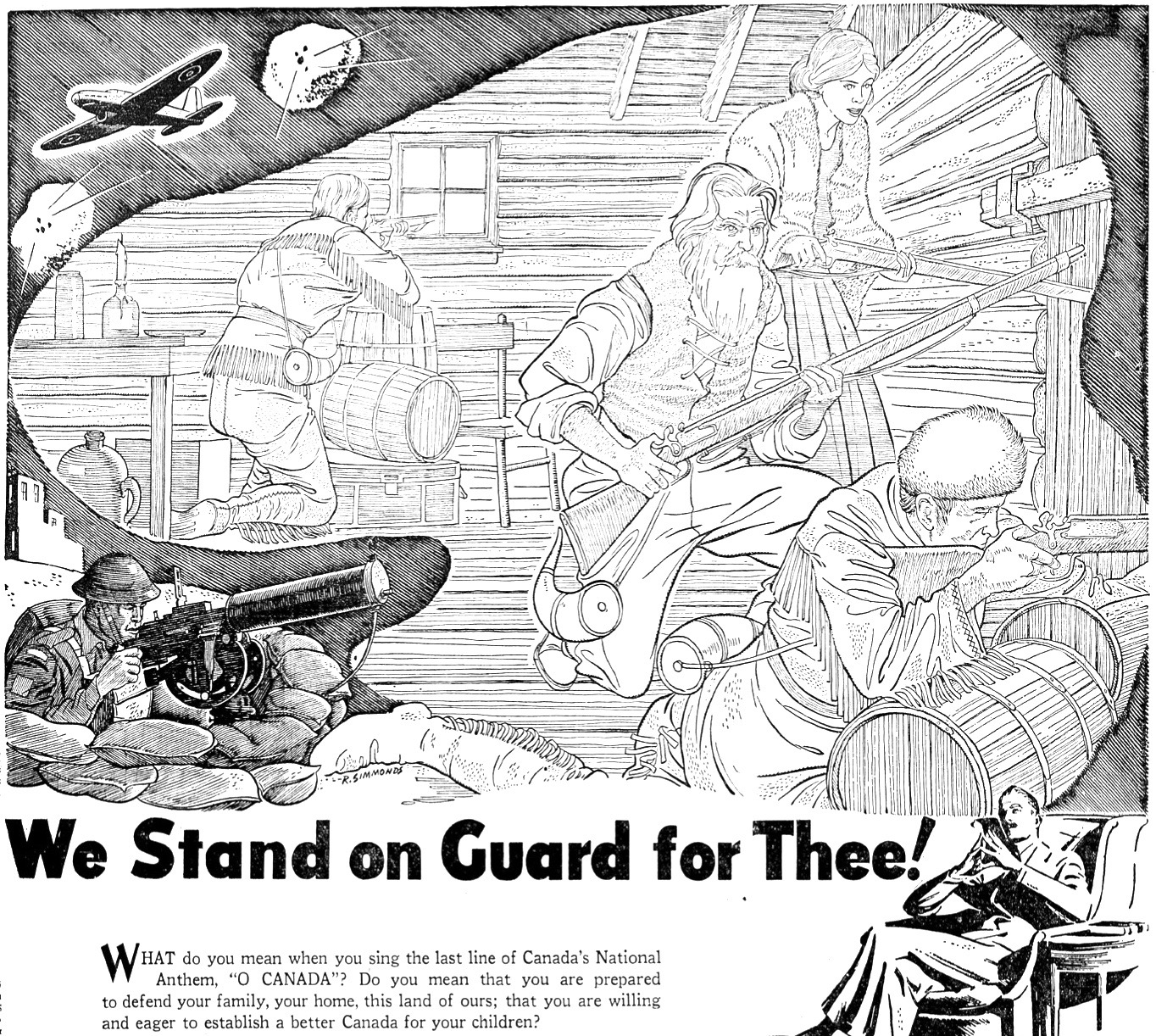
As found in The Trib, 1944. Full page ads were common,
promoting four freedoms, Canadian-style. Details below.

Included below are items from The Tribune (January 27 - February 16, 1944) and from my personal travels... and more.

And there's nothing like a great, artfully drawn map to start the day!


The next two cartoons appeared on the Editorial page of The Trib, but the creators' signatures are not easy for me to read. I don't even have a good guess:


Robert Patterson is the artist who is helping to encourage readers to give blood. More information here re a Robert Patterson, artist/illustrator. I offer no assurance it is the same artist:


Other illustrations by the same artist have been featured here earlier

Yes, I do like great maps... and I am not alone. More to follow:


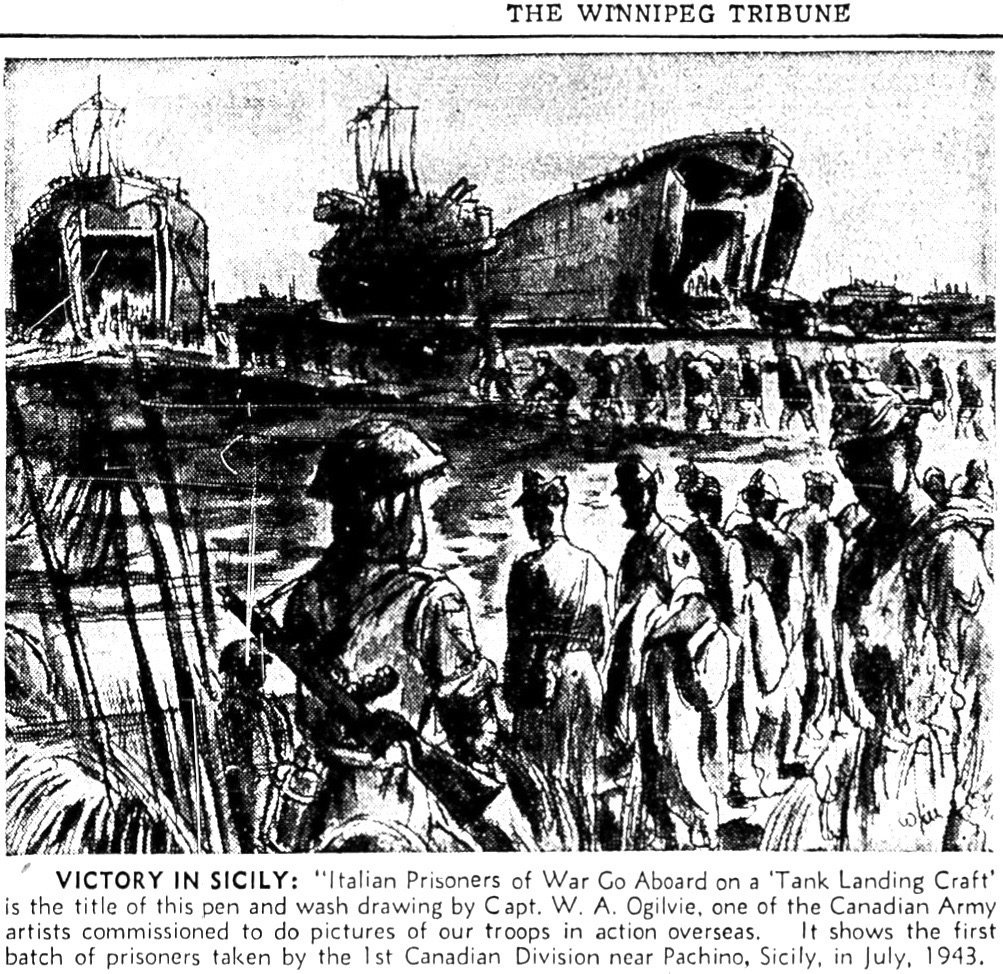
The two drawings shared here by the above artist, Will Ogilvie - could not be
located via 'quick Google search'. Photo/details re Will Ogilvie - at Wikipedia


American Book Award winner E. L. Doctorow (1986 for World's Fair) wrote the following about his father's behaviour during World war II:

My father sat in a chair near the radio and the newspapers opened in his lap to news stories with maps about the very same events being discussed by the commentators. He bought most of the papers - the Times, the Herald Tribune, the Post, the World-Telegram, even the Daily Worker. He would not read the Hearst papers.

In the movies on Saturday afternoons, after the cartoons, the Fox Movietone newsreel showed scenes from the war in Europe: big cannon muzzles afire in the night, German dive-bombers with angled wings coming out of the clouds. 

"German dive-bombers with angled wings coming out of the clouds."
Photo as found in The Winnipeg Tribune,  Feb. 16, 1944

Fox Movietone News - advert from The Tribune, Feb. 14, 1944
Description from World's Fair continues:

You saw the bombs falling. You saw burning buildings in London. You saw people swinging bottles of champagne against the sides of ships, and diplomats getting out of cars and walking hurriedly up the steps of palaces for meetings. The war was talked about everywhere and shown in pictures...

From World's Fair, as found in Writers on World War II, edited by Mordecai Richler, page 37.

More items related to "the arts of war" are revealed below:


I see "Cuties" by E. Simms Campbell regularly as I peruse Saturday issues of The Winnipeg Tribune,  in the lengthy and artful comic section. About the cartoonist:

Elmer Simms Campbell (January 2, 1906 – January 27, 1971)[1] was an American commercial artist best known as the cartoonist who signed his work, E. Simms Campbell. He was the first African-American cartoonist published in nationally-distributed, slick magazines. He was the creator of Esky, the familiar pop-eyed mascot of Esquire.[2] 

More about Mr. Campbell can be found on Wikipedia.


Full page promotions of Canada's four freedoms appear on occasion in The Trib. I include a look at one offering in different sizes so that the print work can be read easily and the large drawings can be seen more clearly;


The following illustration of Italy appears in ECLIPSE by Alan Moorehead:


The following posters appeared on an interior wall of the Saltcoats Heritage Centre, in the town of Saltcoats, a few miles north of Irvine, Scotland: 

Oh, she's a smart cookie! She squeezed in here twice!!


This illustration about lovely Oxo cubes was found in the Irvine Fullarton Times,  as on microfiche at the Saltcoats heritage centre. For those who are wondering... yes, I'm pretty sure there are Canadians in Combined Ops manning some of the landing crafts. Many sailors (e.g., RCNVR) trained with commandos, trained like commandos, but they were not called commandos:


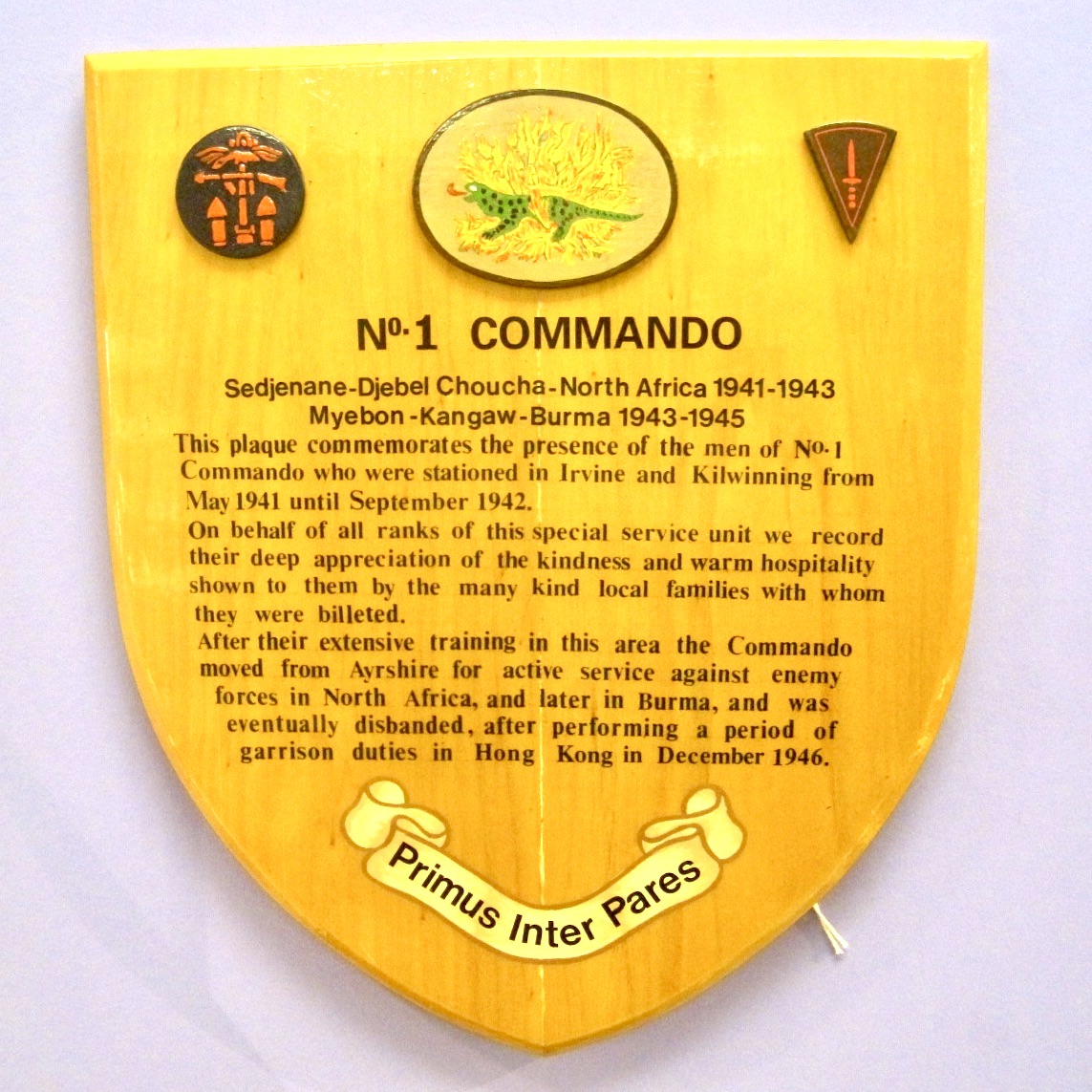
The following three posters were found on file in the Irvine Library during my visit to the UK in 2014. The plaque and information sheet were spotted on the library wall during the same visit: 


The following photos were taken inside the Imperial War Museum in 2014. The magnificent museum was a mere 10-minute walk from my AirBnB, by good fortune: 


I took a photo of another poster like the one above, and it promoted the fine paintings of Major William Orpen. The photo was very poor but I was able to find an example of his work online entitled Zonnebeke (below). More can be learned about William Orpen at Wikipedia:

ZONNEBEKE (1918) (Tate)

The following photo was taken inside The Ship Inn 2014. The magnificent English pub was a mere 15-minute walk from my AirBnB, also by good fortune : ) 


For more information about and examples of 'the arts of war' as found in The Winnipeg Tribune (as well as elsewhere), please link to Editorial Cartoons, Illustrations, More (Winnipeg Tribune) (1)

And please visit 'the arts of war' under "click on Headings" in the right-hand  margin. 

Questions or comments can be directed to the Editor at gordh7700@gmail.com

Unattributed Photos GH